


Treating the Central Valley's Most Common Cancer Conditions
We also treat the most prevalent cancer conditions that occur here in our Central Valley. Our team of specialists is here to provide you with the most effective treatment for your specific need, using the latest advanced treatments and technology available.
Breast Cancer
Our affiliation with Marjorie E. Radin Breast Care Center, the region's best diagnostic program, provides a seamless and speedy transition between diagnosis and treatment.
Our multidisciplinary team of breast surgeons, medical and radiation oncologists, plastic surgeons, geneticists, nurse navigators, researchers, social workers and lymphedema specialists work together to analyze, discuss and prescribe a tailored treatment plan for each and every patient.

.jpg?language=en-US "1000x544_CCI_NurseNavigation-(1)")
Lung Nodule
Our lung program works in affiliation with UCSF Fresno and is one of the largest programs in the nation focused on early diagnosis and expedited treatment of lung cancer. It brings together a multidisciplinary team of specialists that meets to diagnose, assess and design targeted, customized treatment plans.
Our program focuses on three bedrock principles:
- Enhance early diagnosis of cancer by using Ultra-Low Dose CT screening in high-risk smokers
- Expedite lung cancer diagnosis and cancer staging using advanced technology and gene mutation studies
- Improve survival by rapid treatment access and meticulous patient follow-up for five years
Neurological Cancer
To make sure you receive the best care available, we’ve created the Multidisciplinary Neuro Clinic — a team of doctors representing a variety of specialties, including neurosurgery, and medical and radiation oncology.
Working together, they meet regularly to diagnose, assess and design targeted, customized treatment plans based on the specific characteristics of your cancer type. Examples of treatment may include surgery, radiation and/or chemotherapy.
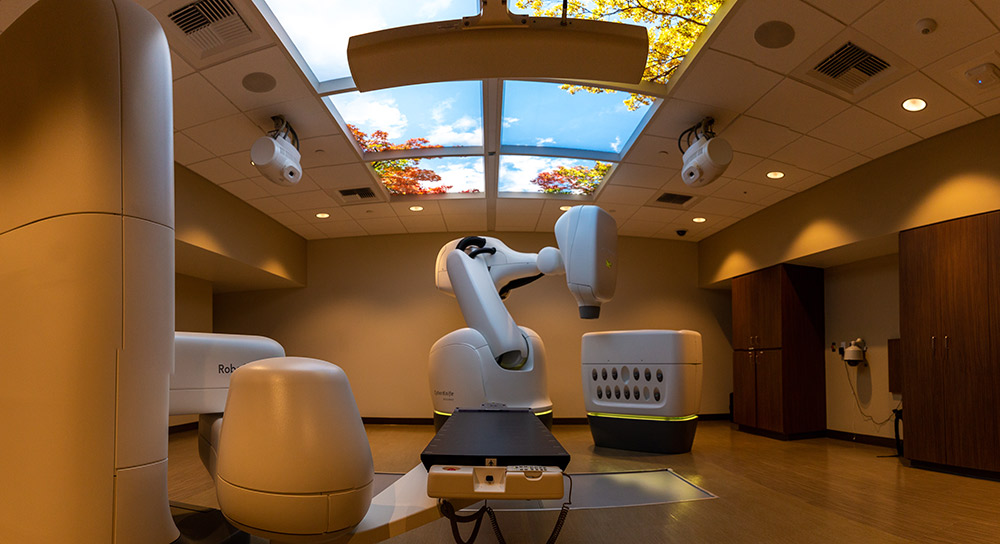
Cancer Conditions Treated at Community
The most common type of bladder cancer is transitional cell carcinoma, also called urothelial carcinoma. Smoking is a major risk factor for bladder cancer, which can often be diagnosed at an early stage.
Treatment Options
- Surgery
- Radiation therapy
- Chemotherapy
- Immunotherapy
Leukemia is a broad term for cancers of the blood cells. It occurs most often in adults over age 55, but is also the most common cancer in children younger than 15 years of age.
Treatment Options
- Chemotherapy
- Radiation therapy
- Chemotherapy with stem cell transplant
- Targeted therapy
New types of treatment are being tested in clinical trials:
- Biologic therapy
- Chimeric antigen receptor (CAR) T-cell therapy
Bone cancer is rare and includes several types. Some bone cancers, including osteosarcoma and Ewing sarcoma, are seen most often in children and young adults.
Treatment Options
- Chemotherapy
- Radiation therapy
- Surgery
- Targeted therapy
- High-dose chemotherapy with stem cell rescue
- (CAR) T-cell therapy
Colon cancer (also known as colorectal cancer) often begins as a growth called a polyp inside the colon or rectum. Finding and removing these polyps can prevent colorectal cancer.
Treatment Options
- Surgery
- Radiofrequency ablation
- Cryosurgery
- Chemotherapy
- Radiation therapy
- Targeted therapy
Ovarian epithelial cancer, fallopian tube cancer and primary peritoneal cancer form in the same kind of tissue and are treated similarly. These cancers are often advanced at diagnosis. Less common types of ovarian tumors include ovarian germ cell tumors and ovarian low malignant potential tumors.
Treatment Options
- Surgery
- Chemotherapy
- Targeted therapy
New types of treatment are being tested in clinical trials:
- Radiation therapy
- Immunotherapy
Cervical cancer is nearly always caused by infection with human papillomavirus (HPV).
Treatment Options
- Surgery
- Radiation therapy
- Chemotherapy
- Targeted therapy
Head and neck cancers include cancers in the larynx, throat, lips, mouth, nose and salivary glands. Tobacco use, heavy alcohol use, and infection with human papillomavirus (HPV) increase the risk of head and neck cancers.
Treatment Options
- Surgery
- Radiation therapy
- Chemotherapy
Kidney cancer can develop in adults and children. The main types of kidney cancer are renal cell cancer, transitional cell cancer, and Wilms tumor. Certain inherited conditions increase the risk of kidney cancer.
Treatment Options
- Surgery
- Radiation therapy
- Chemotherapy
- Biologic therapy
- Targeted therapy
Liver cancer includes hepatocellular carcinoma (HCC) and bile duct cancer (cholangiocarcinoma). Risk factors for HCC include chronic infection with hepatitis B or C and cirrhosis of the liver.
Treatment Options
- Surveillance
- Surgery
- Liver transplant
- Ablation therapy
- Embolization therapy
- Targeted therapy
- Radiation therapy
Plasma cell neoplasms occur when abnormal plasma cells form cancerous tumors in bone or soft tissue. When there’s only one tumor, the disease is called a plasmacytoma. When there are multiple tumors, it’s called multiple myeloma.
Treatment Options
- Supportive care
- Drug therapy
- Chemotherapy with stem cell transplant
Skin cancer is the most common type of cancer. The main types of skin cancer are squamous cell carcinoma, basal cell carcinoma, and melanoma. Melanoma is much less common than the other types but much more likely to invade nearby tissue and spread to other parts of the body. Most deaths from skin cancer are caused by melanoma.
Treatment Options
- Surgery
- Chemotherapy
- Radiation therapy
- Photodynamic therapy
- Biologic therapy
- Targeted therapy
- Immunotherapy
New types of treatment are being tested in clinical trials:
- Vaccine therapy
Brain and spinal cord (also known as central nervous system, or CNS) tumors can be benign or malignant.
Treatment Options
- Active surveillance
- Surgery
- Radiation therapy
- Chemotherapy
- Targeted therapy
New types of treatment are being tested in clinical trials:
- Proton beam radiation therapy
Frequently Asked Questions
Depending on your care and treatment, you can find cancer services on both the Clovis Community Medical Center and Community Regional Medical Center campuses. Location information, including addresses, phone numbers and maps, can be found on this page.
We offer a number of ways to pay your medical bill, including online through our website or through MyChart, by phone or mail, or via monthly payments through our partner, Curae. Learn more about payment options.
We use cookies and other tools to optimize and enhance your experience on our website. View our Privacy Policy.